


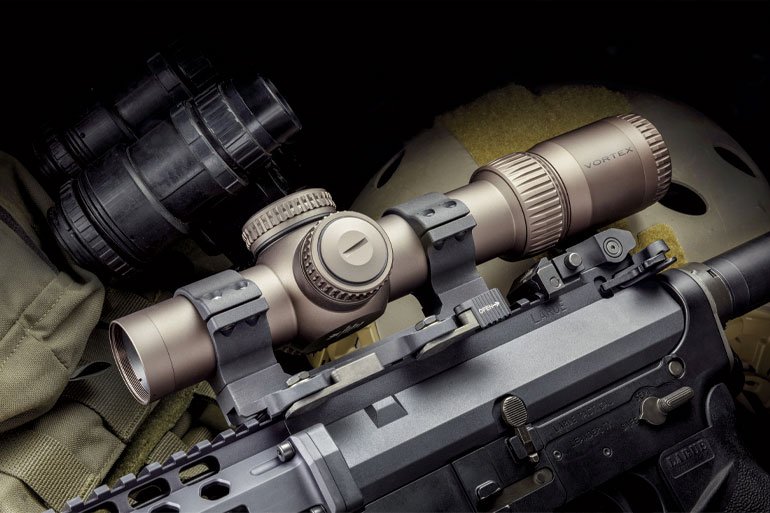
When you’re looking for optics that can handle the demands of tactical shooting, Vortex really stands out. They’ve got a solid lineup that covers a lot of ground, from serious long-range precision work to more general-purpose applications. It’s not just about slapping a scope on a rifle; it’s about having the right tool for the job, and Vortex seems to have a model for just about every scenario you can think of. Many shooters, including those at RKB Armory, have found their gear to be reliable and effective.
Vortex Viper PST Gen II Series
The Viper PST Gen II is a pretty popular choice for those who need a scope that can do it all. It’s built tough and offers a good balance of features for both close-in work and reaching out to longer distances. The integrated illumination controls are a nice touch, making it easy to adjust on the fly without fumbling around.
Vortex Diamondback Tactical Scopes
For shooters who want first focal plane (FFP) capabilities without breaking the bank, the Diamondback Tactical series is a strong contender. FFP reticles are usually found on much pricier scopes, so getting that advantage at this price point is a big deal. It means your reticle stays in proportion with your magnification, making holdovers and range estimations consistent no matter where you are on the zoom.
Vortex Strike Eagle Series
The Strike Eagle line is another area where Vortex offers a lot of bang for your buck. These scopes are designed to give you more of what you need for longer shots, often featuring FFP reticles and illuminated options. They aim to provide sharp images and useful features at a price that makes sense for many shooters looking to step up their game.
Advanced Features in Vortex Scopes
First Focal Plane Reticle Advantages
When you’re out shooting, especially at longer distances, having a reticle that stays in proportion with your magnification is a big deal. That’s where First Focal Plane (FFP) reticles come in. With FFP, the reticle actually gets bigger or smaller as you zoom in or out. This means the subtensions – those little marks on the reticle used for range estimation or holdovers – stay accurate no matter what magnification you’re using. It simplifies things a lot, so you’re not constantly doing math in your head.
- Consistent Holdovers: The distance between reticle marks remains the same relative to the target across all magnifications.
- Accurate Ranging: You can use the reticle for rangefinding at any power setting.
- Simplified Ballistics: Holdover points for wind and elevation are reliable regardless of zoom level.
Illuminated Reticle Functionality
Sometimes, you’re shooting when the light isn’t great – think dawn, dusk, or even just a heavily shaded area. That’s when an illuminated reticle really shines. It gives you a bright, clear aiming point that stands out against your target, making it much easier to get on point quickly. Most Vortex scopes with this feature let you adjust the brightness, so you can dial it in perfectly for the conditions without it being too distracting.
High-Definition Lens Elements
What you see through your scope matters, and Vortex really puts effort into their glass. They use what they call HD (High Density) extra-low dispersion glass. Basically, this glass is designed to let more light through and reduce color fringing. The result is a sharper, brighter image with better color accuracy, especially when you’re looking at targets far away or in less-than-ideal lighting. It makes a noticeable difference in spotting details and making precise shots.
The quality of the glass and coatings on a scope directly impacts how well you can see your target and make accurate adjustments. Vortex’s focus on HD lens elements means you get a clearer, brighter view, which is pretty important when you’re trying to hit a small target at a distance.
Vortex Scope Lines for Precision Shooting
When you’re serious about hitting targets at longer distances, Vortex offers several scope lines designed to give you the edge. They’ve got options that fit different budgets and needs, whether you’re just starting out or already a seasoned marksman. Finding the right Vortex Scopes and Accessories For Sale can really make a difference in your shooting game.
Vortex Razor HD Gen III for Long Range
The Razor HD Gen III line is pretty much Vortex’s top-tier offering for those who demand the absolute best in long-range precision. These scopes are built with incredibly clear HD (High Density) extra-low dispersion glass, which means you get fantastic color accuracy and sharp images, even when you’re looking at extreme distances. They often feature first focal plane (FFP) reticles, meaning the reticle size stays proportional to the magnification. This is a big deal for long-range shooting because your holdover points and range estimations remain consistent, no matter how much you zoom in or out. The turrets are usually quite precise, allowing for fine adjustments when you’re dialing in for wind and elevation.
Vortex Venom Series for Entry-Level Precision
If you’re looking to get into precision shooting without breaking the bank, the Vortex Venom series is a solid choice. These scopes bring a lot of features usually found on more expensive optics down to a more accessible price point. You can often find Venom scopes with first focal plane reticles and generous magnification ranges, like the 5-25×56 model. This allows you to get a good look at distant targets and use the reticle for accurate aiming. They also tend to have a larger main tube diameter, which gives you more adjustment range for your turrets – helpful for those longer shots.
Vortex Viper HS and HD Options
The Viper line sits comfortably between the Venom and the Razor series, offering a great balance of performance and price. You’ll find both HS (Hunting/Shooting) and HD (High Density) models here. The HS series is often geared towards hunters who might take shots at varying distances, while the HD models bring enhanced optical quality and features suitable for more dedicated precision work. Many Viper scopes come with features like capped turrets for a sleeker profile or exposed turrets for quick adjustments, and they often utilize high-quality glass for clear, bright images. These scopes are a popular choice for shooters who want reliable performance without paying a premium for the absolute highest-end features.
Here’s a quick look at some common features you might find:
- Reticle Type: First Focal Plane (FFP) or Second Focal Plane (SFP).
- Magnification: Ranges vary widely, from general purpose to extreme long-range.
- Tube Diameter: Common sizes include 30mm and 34mm, affecting turret travel.
- Glass Quality: Vortex uses different grades, with HD glass providing superior clarity and color.
Choosing the right scope from these lines depends on your specific shooting needs and budget. For extreme long-range competition, the Razor HD Gen III is hard to beat. For getting started in precision shooting, the Venom series offers a lot of bang for your buck. The Viper line provides a great middle ground for many shooters.
Versatile Vortex Optics for Various Platforms
Vortex really knows how to make optics that fit all sorts of guns, not just the tactical ones you might think of first. They’ve got options that work great whether you’re out hunting, plinking, or using a rifle that’s a bit different from the usual.
Vortex Crossfire II Scout Scope
This scope is specifically made for scout rifles. You know, those rifles with the forward-mounted scope position? It’s designed to give you a good field of view and easy aiming from that spot. It’s a solid choice for anyone who likes the classic scout rifle setup. It’s built tough, too, so it can handle being out in the field.
Crossfire HD Scopes for Hunting
When you’re heading into the woods, you need something reliable. The Crossfire HD line offers good clarity and brightness, even when the light starts to fade. They’re built to take a beating, which is pretty important when you’re moving through brush or dealing with weather. You can find them in different magnifications, so you can pick one that suits how you hunt. They’re not overly complicated, just good, dependable optics.
Diamondback Scopes for Versatile Use
The Diamondback series is kind of the middle ground. They pack a lot of features for the price, making them a good all-around option. You can get them with different reticles and magnification ranges, so they can adapt to various shooting situations. Whether you’re shooting at the range or trying to reach out a bit further, the Diamondback usually has something that fits the bill. They use good glass and are built from strong materials, so they should last you a good while.
Vortex understands that not everyone uses the same type of firearm. They put a lot of thought into making sure their optics can be mounted and used effectively on a wide range of platforms, from bolt-action hunting rifles to modern sporting rifles and even some of the more specialized designs out there. This means you’re not limited to just one style of shooting if you choose Vortex.
Essential Vortex Accessories
So, you’ve picked out your Vortex scope, which is awesome. But a scope is only part of the equation, right? You need the right bits and pieces to make it work right on your rifle and keep it in good shape. Vortex makes a bunch of stuff that fits their scopes perfectly.
Scope Mounts and Rings
Getting your scope mounted correctly is super important. If it’s not aligned right, you’re going to have a bad time hitting anything. Vortex has a whole line of mounts and rings made from tough aluminum. They have different heights and styles, so you can find one that works with your rifle and the scope’s objective lens size. They even have cantilever mounts that put the scope forward, which is great for AR-style platforms.
- Precision Machined: Made from solid aluminum for strength.
- Multiple Heights: Options for different rifle stocks and scope sizes.
- Cantilever Designs: Ideal for AR platforms to get proper eye relief.
- Secure Locking: Designed to hold zero even under heavy recoil.
Lens Protection and Cleaning
Keeping your scope lenses clean and protected is a no-brainer. Scratched lenses or dirt smudges can ruin a clear view. Vortex offers flip-up lens covers that snap shut to keep dust and debris out when you’re not using the scope. They also have cleaning kits with special cloths and fluids that won’t damage the coatings on the lenses. A clean lens means a clear shot.
External Magnifiers and Red Dots
Sometimes, you need more than just your main scope. For instance, if you have a red dot sight on your rifle for close-up stuff, you might want a magnifier that can flip out of the way. This lets you quickly switch between having a magnified view and a standard red dot. Vortex makes these magnifiers that pair up nicely with their red dot sights, giving you more flexibility for different shooting distances.
Don’t forget that even the best optics need a solid foundation. The mount and rings are what connect your scope to your firearm, and a weak link here can cause all sorts of problems, from losing zero to outright failure. It’s worth spending a bit of time and money to get this part right.
Choosing the Right Tactical Firearm Optics
Picking out the right tactical firearm optics can feel like a puzzle sometimes. You’ve got a lot of choices out there, and what works for one person might not be the best fit for another. It really comes down to what you’re doing with your firearm and what you expect from your optic. Don’t just grab the first shiny thing you see; think about your needs.
Understanding Reticle Types (MOA vs. MRAD)
This is a big one. You’ll see “MOA” (Minute of Angle) and “MRAD” (Milliradian) thrown around a lot. They’re both ways to measure angles, which helps you make adjustments for bullet drop and windage. Think of them like different units of measurement – inches versus centimeters, sort of. MOA is more common in the US, using fractions of an inch at 100 yards. MRAD is used more internationally and is based on a decimal system, making some calculations a bit simpler if you’re used to it.
Here’s a quick look:
- MOA: 1 MOA is roughly 1.047 inches at 100 yards. Many shooters find it easier to grasp because it’s based on inches.
- MRAD: 1 MRAD is 10 centimeters at 100 meters (or about 3.6 inches at 100 yards). It’s a cleaner decimal system.
Most modern tactical firearm optics will have turrets marked in either MOA or MRAD. It’s important to know which one your scope uses and stick with it for consistency. Trying to mix and match can lead to some serious frustration at the range.
Magnification Range Considerations
How much zoom do you need? This depends heavily on the distances you’ll be shooting. For close-quarters stuff, like under 100 yards, you might not need much magnification at all, or even just a red dot. For longer distances, say 500 yards and beyond, you’ll want something with a higher top end. Many scopes offer variable magnification, like a 3-9x or 4-16x. The first number is the lowest magnification, and the second is the highest. A wider range gives you more flexibility, but sometimes, simpler fixed magnifications can be more robust and less complex.
Durability and Construction Materials
Tactical firearm optics are often used in tough conditions. You want something that can handle bumps, drops, and the elements. Look for scopes built with strong materials like aircraft-grade aluminum. They should also be sealed to prevent fogging and water intrusion – think nitrogen purging or argon purging. A scope that can withstand recoil is also a must, especially on larger caliber firearms. A well-built optic is an investment that will last.
When you’re looking at tactical firearm optics, remember that the “best” choice isn’t universal. It’s about matching the optic’s features to your specific firearm, your shooting style, and the environments you’ll be operating in. Don’t get caught up in trends; focus on what truly serves your purpose.
Frequently Asked Questions
What are the main Vortex scope series for tactical shooting?
Vortex offers several great lines for tactical use. The Viper PST Gen II series is known for its versatility, handling everything from close-up fights to long-distance shots. The Diamondback Tactical scopes provide good quality at a more budget-friendly price, especially with their first focal plane reticles. And the Strike Eagle series is another solid choice, often packing advanced features without costing a fortune.
What’s the big deal with First Focal Plane (FFP) reticles?
Think of a First Focal Plane reticle like a ruler that stays the same size no matter how much you zoom in or out. This means the markings on your reticle (like for aiming further or accounting for wind) are always accurate at any magnification. It makes figuring out distances and making adjustments much simpler, especially when you’re shooting at different ranges.
Why would I want an illuminated reticle?
An illuminated reticle has a light that shines on the crosshairs or aiming points. This is super helpful when you’re shooting in low light conditions, like at dawn or dusk, or in dark places like forests. It makes it much easier to see your aiming point against your target, helping you make a quicker and more accurate shot.
What are HD lens elements and why are they good?
HD stands for High Density. These special lenses help make the image you see through the scope really clear and sharp, with colors that look true to life. They also help gather more light, which means you can see better in dim conditions and the picture is brighter overall. It’s like upgrading from an old TV to a new, super-clear one.
How do I choose between MOA and MRAD reticles?
MOA (Minute of Angle) and MRAD (Milliradian) are just different ways to measure angles for aiming. Think of them like inches and centimeters. MOA is more common in the US, while MRAD is used more internationally. Both work well, but you need to make sure the reticle measurements match the adjustments on your scope’s turrets (the knobs you turn to adjust aim) for the most accurate shooting.
What kind of accessories does Vortex offer for their scopes?
Vortex has a whole bunch of accessories to go with their scopes. This includes things to securely attach the scope to your rifle, like mounts and rings. They also have lens covers to protect the glass, cleaning kits to keep it clear, and even extra sights like red dots or magnifiers that can be used alongside your main scope for different shooting situations.
