



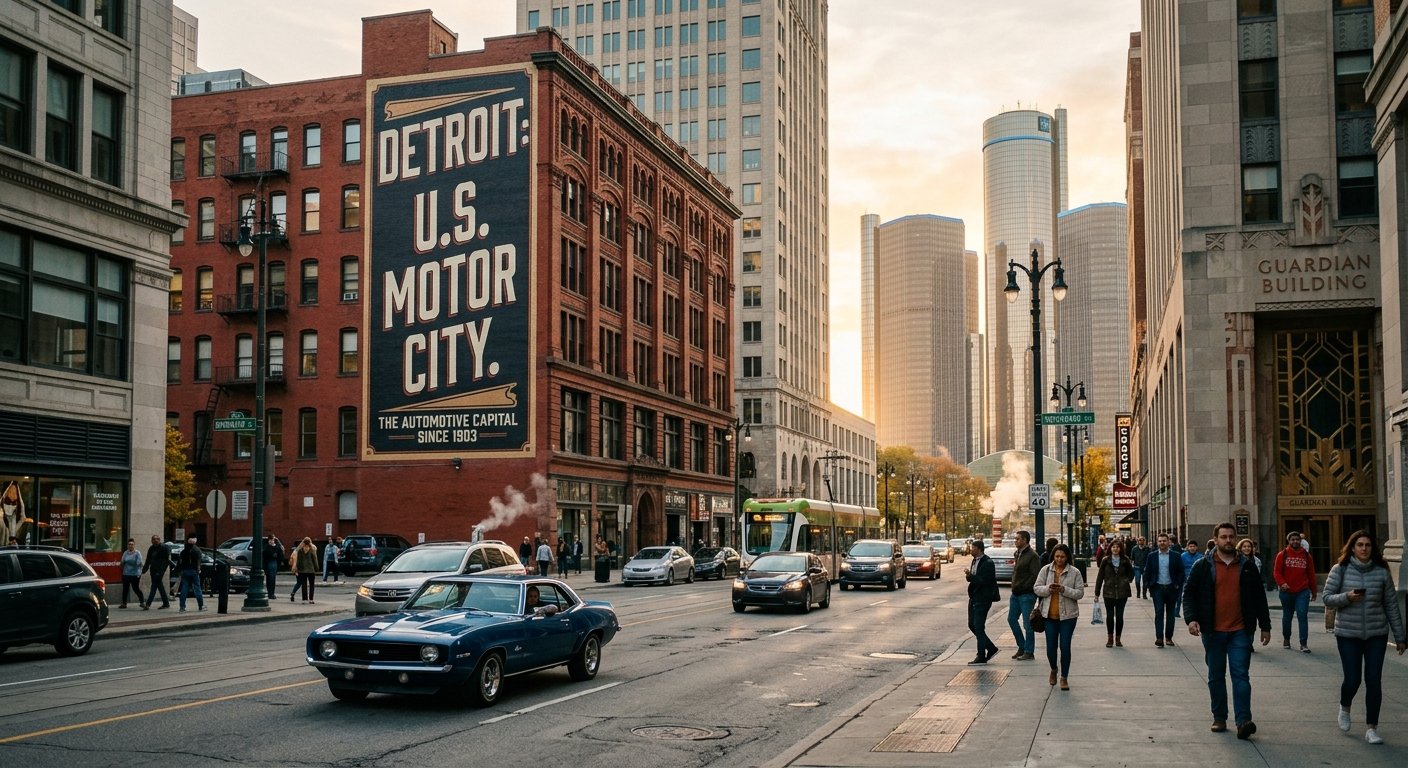
The term us motor city brings up images of classic cars, roaring engines, and busy assembly lines. Most people know that this famous title belongs to Detroit, Michigan. But the real story is much deeper than just shiny chrome and big factories. It is a story about big dreamers, smart inventions, and hard work.
Over one hundred years ago, a small group of thinkers changed how the whole world moved. They took simple raw materials like iron and wood and turned them into fast cars. This change created millions of jobs and gave everyday families the freedom to travel anywhere.
Today, the us motor city is changing once again. It is no longer just about old gas engines and heavy steel. Modern builders in the region are working on electric power, smart self-driving software, and clean energy. Understanding this iconic place helps us see where our transportation is heading next.
What Makes US Motor City So Famous?
The growth of the us motor city did not happen by random chance. In the early 1900s, Michigan had easy access to shipping routes along the Great Lakes. Local builders could quickly ship in steel, coal, and lumber. This easy transport made it the best spot to build heavy machinery.
Another key reason was the huge pool of skilled workers. Shipbuilders and carriage builders were already living in the area. They knew how to shape metal, build motors, and fit wooden frames. When early car designers needed help, they found expert hands ready to build.
How Early Inventors Built The First Cars
Before giant factories existed, cars were built slowly by hand. Early inventors like Ransom Olds and Henry Ford wanted to speed up the process. Olds created an early line setup, but Ford made the moving assembly line famous in 1913.
This new way of building meant workers stayed in one spot while the car frame moved to them. Tasks became simple and fast. Building a full car went from taking twelve long hours down to just ninety-three minutes! This saved a lot of money and allowed regular workers to buy their own vehicles.
The Big Three Auto Giants That Started Here
Three major car brands quickly rose to power in the us motor city. These brands are General Motors, Ford, and Chrysler. Together, they were known around the world as the Big Three.
- Ford Motor Company: Built cheap, reliable cars for regular working families.
- General Motors (GM): Offered different brands for every budget, like Chevrolet and Cadillac.
- Chrysler: Focused on strong engineering, powerful engines, and stylish designs.
These companies turned the area into a massive powerhouse. Thousands of smaller shops opened up nearby to supply tires, glass, paint, and screws.
The Great Assembly Line Revolution
The moving assembly line changed human work forever. Instead of one person spending weeks building a single motor, each person added one small piece. The work was hard and repetitive, but it was very efficient.
To keep workers happy, Henry Ford made a shocking move in 1914. He doubled factory pay to five dollars a day. People from all over the world packed their bags and moved to the us motor city for these great jobs. It created a strong middle class that had extra money to spend.
World War Two And The Arsenal Of Democracy
When World War Two started, local car factories stopped making passenger cars completely. Within weeks, engineers changed the assembly lines to make military gear. The region earned a powerful new name: The Arsenal of Democracy.
Massive plants built giant bomber planes, heavy tanks, trucks, and engine parts. The quick speed of these car factories helped supply the troops overseas. This era proved that the us motor city could solve complex manufacturing problems faster than anyone else.
The Golden Era Of American Muscle Cars
After the war ended, American drivers wanted fast, stylish, and bold vehicles. The 1950s and 1960s became known as the golden age of muscle cars. Designers added shiny chrome, big tailfins, and roaring V8 engines.
Models like the Ford Mustang, Chevrolet Camaro, and Pontiac GTO became symbols of freedom and youth culture. Driving up and down main city avenues on Friday nights became a popular hobby for teens. The local automotive spirit was louder and prouder than ever before.
Music Culture Born Beside The Engine Factories
Cars were not the only thing coming out of the us motor city. In 1959, Berry Gordy Jr. started a small record label named Motown Records. The word Motown was short for “Motor Town”.
The music hit factory used assembly line ideas to produce hit songs. Artists like Stevie Wonder, The Supremes, and Marvin Gaye created smooth soul music that topped music charts worldwide. The catchy rhythms were heavily inspired by the steady, beating sounds of local factory machines.
Facing Modern Challenges And Economic Shifts
By the late 1970s and 1980s, the us motor city faced tough times. Foreign car companies began selling smaller cars that used much less gas. Local factories struggled to compete, leading to sudden plant closures and job losses.
The city population dropped, and many neighborhood buildings sat empty. It was a painful reminder that relying on just one main business can be risky. However, local residents refused to give up. They worked hard to save historical landmarks and bring new business ideas into downtown neighborhoods.
The Shift Toward Electric Vehicles And Smart Tech
Today, a brand-new revolution is taking place across the us motor city. The classic gas engine is slowly giving way to battery power. Auto makers are investing billions of dollars to build modern EV battery plants and software centers.
Car makers are no longer just building mechanical parts; they are building rolling computers. New vehicles feature lane-assist steering, automatic braking, and smart voice screens. Local engineering schools are training thousands of students in software design and green power systems.
Visiting Historic Automotive Landmarks Today
If you travel to the us motor city today, you can explore amazing historic spots. The region honors its past while building its future. Here are a few places every fan should see:
- Henry Ford Museum: A giant building packed with historic cars, trains, and rare inventions.
- Ford Piquette Avenue Plant: The historic workplace where the very first Model T was born.
- Hitsville U.S.A.: The original Motown recording studio that changed pop music history.
- The Detroit Historical Museum: Filled with detailed exhibits about local factory life and city history.
Why US Motor City Matters For The Future
The story of the us motor city teaches us how human grit and fresh ideas can shape history. From changing global travel with moving belts to supplying wartime tools, it has always been a hub of action.
As we move toward cleaner roads and self-driving taxis, this historic hub remains a major player. The lessons learned over a century of manufacturing are helping engineers solve modern transportation problems today. The engines may be getting quieter, but the drive to create is still going strong.
Frequently Asked Questions
Why is Detroit known as the us motor city?
Detroit earned this name because it was the early center for American car design and manufacturing. Location benefits, raw materials, and top inventors made it the ideal place to mass-produce cars.
Which big car companies started in this city?
The most famous companies are Ford Motor Company, General Motors (GM), and Chrysler. These three firms controlled much of the global auto market for decades.
What was Henry Ford’s biggest contribution?
Henry Ford did not invent the car, but he perfected the moving assembly line in 1913. This cut production time and made cars affordable for everyday people.
Are cars still being built in the area today?
Yes, many modern assembly plants operate in and around the city today. They now focus heavily on trucks, SUVs, and new electric vehicles.
How did the city get the name Motown?
Motown is a short nickname made by joining the words “Motor” and “Town”. It became world-famous thanks to Motown Records, a hit music label started in 1959.
What is the focus of the us motor city today?
The current focus is on green energy, high-tech batteries, and self-driving software. Local companies are trying to lead the global shift to electric transportation.
